
guide
Track Team Warm-Ups: What to Order for Spring Meets
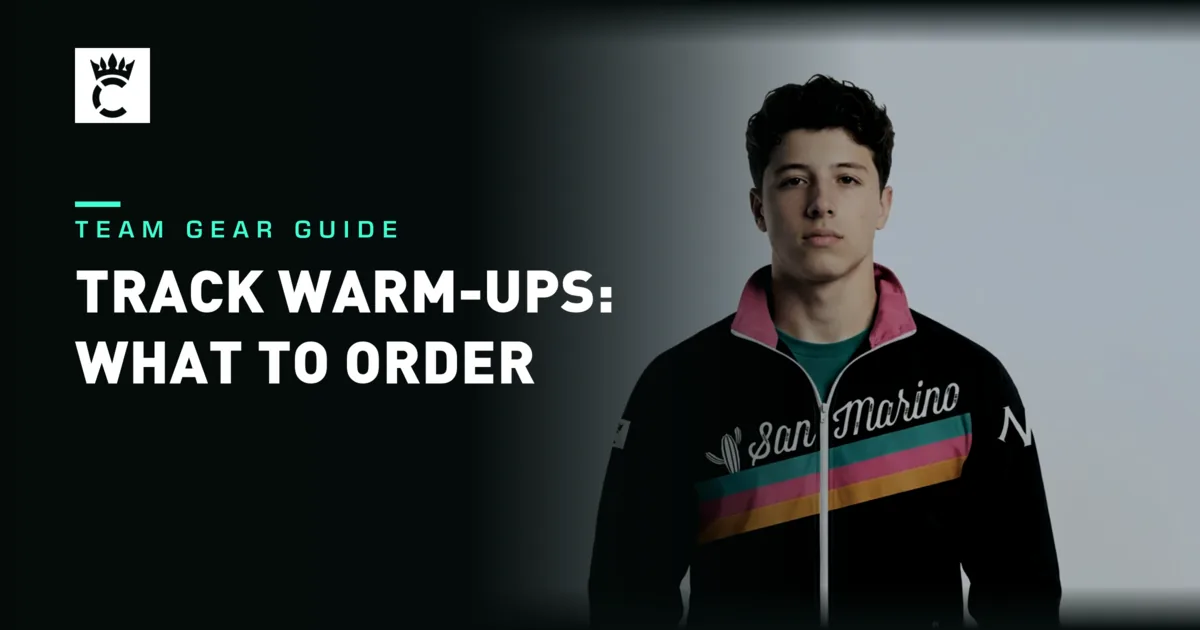
Quick answer: order two pieces before anything else: a wind-resistant jacket or quarter-zip and a matching jogger, in performance fabric rather than cotton. Add a hoodie for the cold early meets and a packable rain shell if your budget allows. Size them to layer over the uniform, make everything beyond the core set optional through a team store, and get the order approved in January so the gear is in hand for the first outdoor meet.
A track meet is mostly waiting. A sprinter might race for under a minute across a five-hour afternoon. A thrower can stand around for forty minutes between flights. In March and April that waiting happens on metal bleachers in the wind.
So the same questions come up every spring. On r/trackandfield an athlete asks how to stay warm at track meets, and the answers are layers: tights under sweatpants, a sweatshirt or a coat, gloves. A thread on staying loose between events says the same thing: athletic pants between races, plus a windbreaker or a long sleeve. Sprinters facing a very cold meet are told to pile on thick warm-up gear and strip down right before the race.
Athletes already know what works. The coach's job is turning that into a team order that fits the budget. Here is how we'd build it.
What a track warm-up actually has to do
A warm-up isn't a fashion piece. It has four jobs, and each one points at a fabric or a cut.
- Block wind. Most tracks sit in an open bowl. Wind is what makes 50 degrees feel miserable, so the outer layer should be wind-resistant.
- Handle sweat. Athletes warm up hard, then sit. A layer that soaks up sweat and holds it gets cold fast. That's the problem with cotton, and it's why a performance fabric that wicks and dries is worth paying for.
- Come off quickly. Athletes strip at the line, the ring or the runway, often with a minute to spare. Zips beat pullovers for the top layer. Pants need to come off without a fight.
- Look like one team. A full squad in matching warm-ups reads as a program, and officials and parents can find your kids in a crowd of twelve schools.
Keep those four in mind and most of the catalog decisions make themselves.
The core set: a jacket and a jogger
If you can only buy two pieces, buy these. A jacket and a pant cover the whole body, go over the uniform, and work from the bus to the awards stand.
The set we build for this is the Momentum line. The Momentum Jacket is a lightweight performance knit with a water-repellent finish, wind-resistant construction and 4-way stretch. It comes as a quarter-zip or a full zip. For track, the full zip is easier to get off over a singlet at the line. The quarter-zip is the cleaner look, and it works fine if your athletes mostly warm up, strip in the tent, and walk to the start.
One honest note on the finish: water-repellent is not waterproof. It beads off mist and light rain. It won't keep a kid dry through a two-hour downpour.
The matching Momentum Jogger uses the same fabric family, with a wide waistband, an internal drawcord and a tapered leg with elastic cuffs. That tapered ankle keeps fabric away from the feet during drills. It also means the jogger won't slide off over spikes. Teach athletes the order: joggers off, then spikes on. It saves a lot of hopping around at the start line.
Both pieces come in women's and youth cuts too (Women's Momentum Jacket, Women's Momentum Jogger), and adult sizes run AXS to 3XL, so one design covers the whole roster and the coaching staff.
Hoodie, quarter-zip or full-zip jacket?
This is the argument in most coaches' offices. All three work. They do different jobs.
| Piece | Best at | Watch out for |
|---|---|---|
| Momentum Hoodie | Warmth while sitting. Polyester performance fleece, funnel collar with drawcords, kangaroo pocket for hands and gloves. | A pullover is slower to take off at the line. Fleece alone doesn't stop wind as well as a shell. |
| Momentum Jacket (1/4 zip) | Wind and light rain during warm-up laps and drills. Stretch for strides and dynamic work. | Still goes over the head. Less insulation than fleece when sitting still. |
| Momentum Jacket (full zip) or Warm-Up Jacket | Fastest on and off. Easy to vent between events. Zippered pockets on the Warm-Up Jacket. | Same as above: add a layer under it for the coldest meets. |
| Packable Jacket | Rain and wind. Hooded shell that folds into its own pocket and lives in the bag. | It's a shell, not insulation. In real cold it goes over a hoodie. |
If the budget allows one top, pick by your weather. Cold and dry: the hoodie. Windy and wet: the jacket. If it allows two, the hoodie plus the packable shell covers nearly everything a spring season throws at you, because the shell goes over the fleece on the worst days.
Distance runners and sprinters tend to split here. Distance kids warm up for a long time and get hot, so they like a light jacket they can unzip. Sprinters, jumpers and throwers spend more time standing, so they want the fleece. That's a good reason to let athletes choose their add-on rather than forcing one.
Why performance fabric beats cotton between events
A cotton sweatsuit is cheaper on day one. It costs you on meet day.
Cotton absorbs sweat and holds on to it. An athlete finishes a warm-up damp, sits down, and the wind does the rest. Polyester performance fabrics move moisture to the surface where it can dry, so the layer against the body stays warmer. We covered the same idea for race-day base layers in what to wear under a cross country uniform in the cold, and it applies even more to the gear athletes sit in for hours.
There's a durability point too. On sublimated pieces like the Momentum line, the colors and logos are dyed into the fabric, so there's nothing on the surface to crack or peel after a season of being stuffed in a bag. A warm-up should last an athlete several seasons. Build the budget around that, not around one spring.
Care is simple: machine wash cold, and check the tag on each piece for drying, since the jacket and jogger hang dry while the hoodie can tumble on low.
How to keep the cost under control
Warm-ups are where a track budget gets away from people. In one parent thread on uniform costs, a parent pointed out that a track jacket and pants at $50 or more each can push a full kit past $350, and the advice was to cut the list down. That's the right instinct. Three ways to do it:
- Make two pieces required and the rest optional. Jacket and jogger for everyone. Hoodie, shell, beanie and extras go in an online team store where families who want them can buy them. Nobody is forced into a $300 package.
- Use a bundle. Our track and XC bundles price the pieces together. As of this writing the Training bundle (short sleeve tee, long sleeve tee, hooded fleece and jogger) is $88, Wingfoot Ready (race top, training short and Momentum quarter-zip jacket) is $135, and the Warm-Up bundle (race top, training short, Momentum quarter-zip jacket and Momentum Jogger) is $202. Check the bundle page for current pricing.
- Buy warm-ups on a multi-year cycle. Keep one design for several seasons. New athletes order the same set, returning athletes keep theirs, and the team still matches. Avoid putting the year on anything.
A store can also raise money while it outfits the team. We walked through how in running a team store as a fundraiser. And if you need help making the case for funding in the first place, see how to convince your school to buy new track uniforms.
Sizing warm-ups so they layer
Warm-ups go over a singlet and shorts, and on cold days over a base layer and tights as well. Size for that.
- Use the garment's own chart. Each Momentum piece has its own measurements on the men's performance size guide and the women's guide. Don't assume a jacket size from a singlet size.
- The cut is athletic. These are built to sit close and layer without bunching. An athlete who wants a roomy fit over a thick hoodie, or who is between sizes, should go up one.
- Freshmen grow. If the set has to last four years, size the 14-year-olds with a little room. Elastic cuffs and a drawcord waist forgive a size up better than a size down.
- Collect sizes in writing. A sign-up form or a team store with the chart on the page beats a show of hands at practice.
When to order for a spring season
Count backward from your first outdoor meet. Sublimated production at Compound runs 25 days after the art is approved, and an online team store adds 5 to 7 days for sorting and shipping. Design approval comes before all of that, and it's the step that drags when a booster club, an AD and a head coach all want a say. The full breakdown is in how long custom team uniforms take.
In practice: start the design in December or early January, approve by late January, and you have the gear for a March opener with a buffer. Most team pieces start at a 6-piece minimum, so a small distance squad or a throws group can still order. Orders ship UPS.
The design itself costs nothing to start. Send your logo and colors through the track and XC quick quote and we'll send back free design mockups before you commit to anything.
A note on meet rules
Warm-ups are for before and after. Athletes compete in the school uniform, and what can be worn with it during competition is set by the governing body. For high school that's the NFHS track and field rulebook plus anything your state association adds. Club and college teams should check USATF, AAU or NCAA rules. We covered the uniform side in cross country uniform rules. Rules change, so read the current book rather than last year's handout, and ask the meet referee if you're unsure.
Frequently asked questions
What should a track team wear for warm-ups?
A wind-resistant jacket or quarter-zip and a matching jogger in performance fabric are the core set. Add a fleece hoodie for cold early-season meets and a packable rain shell for wet ones. Everything should fit over the competition uniform.
Is a hoodie or a quarter-zip better for track meets?
They do different jobs. A performance fleece hoodie is warmer when athletes are sitting between events. A wind-resistant quarter-zip or full-zip jacket is better for warm-up laps, wind and light rain, and a full zip comes off fastest at the start line. Many teams require a jacket and offer the hoodie as an option.
Can athletes compete in their warm-ups if it is cold?
Generally no. Warm-ups come off before competition and athletes compete in the school uniform. What can be worn under or with the uniform is covered by the NFHS rulebook for high school, plus any state association rules, so check the current rules or ask the meet referee.
When should we order track warm-ups for the spring season?
Approve the design by late January for a March opener. Sublimated production at Compound runs 25 days after art approval, and an online team store adds 5 to 7 days for sorting and shipping. Starting the design in December or early January leaves a buffer.
How do we keep warm-ups affordable for families?
Require only two pieces, a jacket and a jogger, and put the hoodie, rain shell and extras in an online team store as optional buys. Use a bundle to price pieces together, and keep one design for several seasons so returning athletes do not have to rebuy.