
guide
What Can You Wear Under a Cross Country Uniform in the Cold?
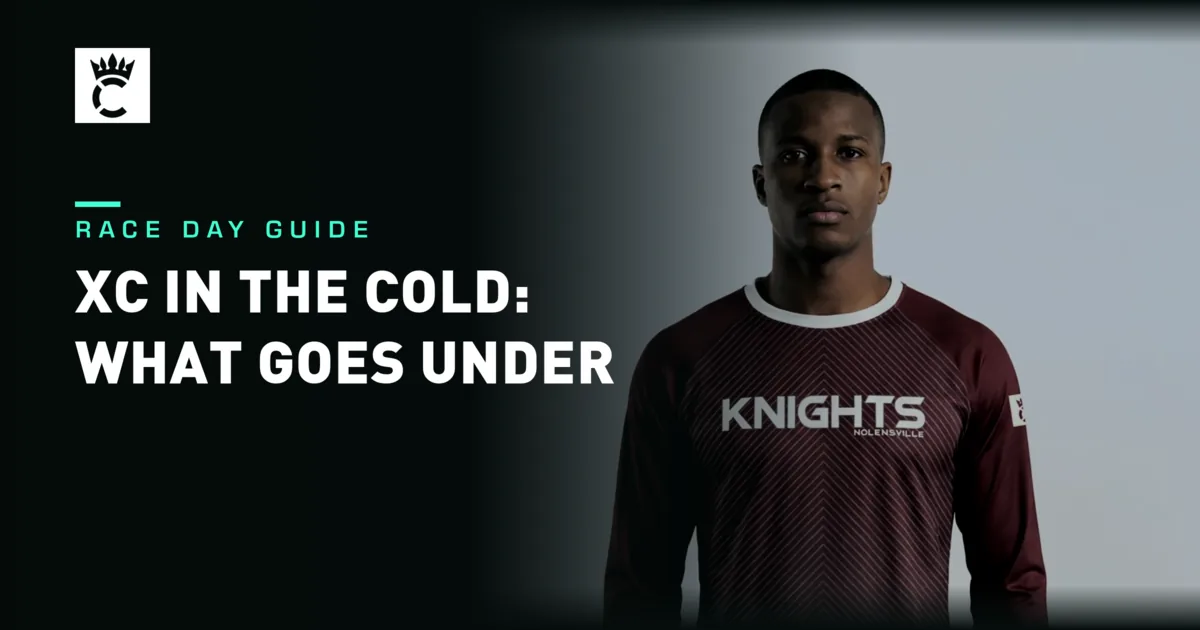
Quick answer: a close-fitting synthetic long-sleeve base layer is the standard move, with tights under the shorts when it gets really cold, plus a hat and gloves. Under the current NFHS high school rule, any visible garment worn under the uniform is a foundation garment, with no color or logo restrictions. Your state association or meet can be stricter, so check before the bus leaves. Skip cotton, and decide on layers before the gun, because what starts the race as uniform has to finish it.
Every November the same question lands on r/CrossCountry: it's going to be freezing at the meet, the coach handed out singlets, so what am I actually allowed to put under this thing? The top answer there is the right one, a synthetic long-sleeve base layer that fits close. Parents ask it too, usually the night before a kid's first cold race.
There are really two questions in there. What's legal, and what will keep a runner comfortable without slowing them down. Here's both.
What the rule says about layers under the uniform
High school cross country and track share one uniform rule, NFHS Rule 4-3. The line that settles this question is short. In the NFHS uniform rule summary, any visible garment worn under the uniform top or bottom is “considered a foundation garment,” and foundation garments aren't subject to color or logo restrictions.
So a runner in a black long sleeve next to a teammate in a white one, both under the team singlet, is fine at the NFHS level. If you remember the old rule that everything underneath had to be one solid color, you're not imagining it. It has changed. Older state handouts with the old wording are still floating around online, which is where a lot of the confusion comes from.
Three things still matter:
- Your state can be stricter. State associations can add requirements, and a games committee can set rules for its own meet. Read the handbook and the meet sheet. Club and college runners should check their own governing body's current rulebook (USATF, AAU, NCAA), since NFHS doesn't apply there.
- Outer layers are a different story. The rule says a school-issued or school-approved outer garment, such as a T-shirt, sweatpants or tights, becomes the official uniform when it's worn. Outer garments have to show through color, logo and color combination that everyone is on one team. We broke that part down in do cross country uniforms have to match.
- What's on stays on. Removing any part of the uniform in the competition area is illegal. The penalty is a warning, then disqualification from the event if it's repeated. Pick the layers before the final call, not at the first mile marker.
What to wear at each temperature
There's no official chart. The bands below follow Coach Saltmarsh's cold-race guide, written by a New England coach who races in this stuff every fall. Go by the forecast for the start time, not the morning reading.
| At the gun | Top | Legs | Extras |
|---|---|---|---|
| 40°F and up | Singlet alone | Uniform shorts | Arm sleeves if they want them |
| 25–40°F | Long-sleeve base layer under the singlet | Shorts, with compression if the runner likes it | Hat and gloves to start |
| Below 25°F | Long-sleeve base layer under the singlet | Tights under the shorts | Hat and gloves |
If it's wet or windy, dress one band colder.
Runners don't all agree on where the lines sit, and that's normal. In a thread from a parent getting a kid ready for a first 5K in the cold, one reply suggests a long-sleeve base layer and light gloves at 20–30°F and adding tights below that. In another thread on racing in the cold, the advice was full tights once it drops under about 38°F. Every runner is different, so set the band as a starting point and let each runner adjust inside it.
A new runner will almost always overdress. A 5K at race effort heats you up fast, and being a little cold on the line is the usual trade. That's different from a runner who's soaked and standing around afterward, which we'll get to.
What makes a good base layer
You don't need anything fancy, but a few details separate a good layer from one the runner fights for three miles.
- Synthetic, not cotton. Cotton holds sweat and stays wet. Polyester or a poly-spandex blend moves it off the skin and dries faster.
- Close fit. It has to lie flat under the singlet. Extra fabric bunches at the waist and under the arms, and that's where chafing starts. If you're deciding on the top itself, a fitted cut leaves more room for a layer than people expect (see track singlet vs tank top).
- Tested before race day. Run a workout in the full setup, singlet and all. Championship day is a bad day to find out a seam rubs.
- Tucked or long enough. NFHS says the uniform top has to hang below or tuck into the waistband, and bare midriffs aren't allowed. Check the layers together with the runner standing up.
- Number on the outside. If the meet uses bib numbers, they go on unaltered. Pin through the singlet where the official can read it, not under anything.
Our Men's, Women's and Youth Raglan Performance Long Sleeves are micro-interlock polyester with four-way stretch, and a raglan shoulder seam that stays out of the way of a running arm swing. It isn't a compression piece, so have the runner try the singlet over it. The rule doesn't require a base layer to match, but plenty of coaches like the look when the whole line is in team colors. Sizing is on the performance size guide.
What about the legs?
Most runners keep shorts as long as they can. Moving legs handle cold better than a standing body does. When a runner wants something more, there are two steps:
- Compression shorts under or in place of training shorts. They add a little warmth at the hips and cut down on chafing (we covered that in are compression shorts good for running). NFHS allows compression-style bottoms for boys and girls. Ours are the Men's 7-Inch, Women's 3-Inch, Boys' and Girls' track compression shorts.
- Full tights. Worn under the team shorts they're a foundation garment, and any plain running tight works. Compound doesn't make a full-length tight, so this is one to buy elsewhere. If the school issues tights as the visible bottom, they become the uniform, and the 2025 NFHS cross country interpretations treat tights and shorts on the same team as legal when the bottoms are the same color.
The throwaway layer, hats and gloves
The throwaway trick comes up in almost every cold-race thread: start in a cheap old layer over your race gear, then ditch it. It's a great road race habit. In a scored high school race, we wouldn't plan around it. Article 3 makes removing uniform pieces in the competition area a penalty, and an unmatched outer layer works against the same-team rule. If you want to try it, ask the clerk first. The safer version is taking the old sweatshirt off at the final call and handing it to a teammate or parent at the box.
Gloves and hats are the pieces runners actually shed. Coach Saltmarsh's guide notes that they aren't treated as uniform garments, so tossing them in the first mile is common, and that a 2025 NFHS interpretation confirmed hats are legal unless the state or games committee says otherwise. Check your state on this one too. Cheap cotton gloves are fine here since the point is to lose them.
Don't forget before and after the race
The layer under the singlet gets the attention, but most of the cold time on a meet day is spent standing. A warm-up wears off quickly when runners wait in the box, so keep them in warm layers until the final call.
This is where a real team warm-up pays for itself. The Men's and Women's Momentum Jacket (a quarter-zip) and the Momentum Jogger have a water-repellent finish and hold off wind, and the Packable Jacket folds into its own pouch for the team bag.
After the finish, wet clothes come off first. Have each runner pack a spare top, fresh socks, a hat and gloves in a sealed bag that survives a wet tent. They change first and cool down second. A runner who can't stop shivering or starts slurring words goes to the athletic trainer or medical tent right away.
If you're the coach planning next season
Championship season is a bad time to order, so use this year's cold meets as your list for next year. Note who showed up without a layer, what the team was short on, and whether families would've bought extras.
- Race kit first. A singlet and shorts in one design for the whole roster. Our Track & XC bundles group the pieces together.
- Optional layers through a store. A team store lets families buy the long sleeve or warm-up they want without the program carrying the cost.
- Order early. See how long custom team uniforms take and work back from your first meet.
When you're ready, send us a quick quote and we'll put together free design mockups in your colors.
Frequently asked questions
Can you wear a long sleeve under a cross country uniform?
Yes, at the NFHS high school level. A visible garment under the uniform top is a foundation garment, with no color or logo restrictions. State associations and meets can be stricter, so check your handbook and the meet sheet.
Does the shirt under my singlet have to match my team's colors?
Not under the current NFHS rule. A long sleeve or tights worn underneath can be any color. The older solid-color requirement is gone at the national level, but some state or meet rules may differ, so confirm with your coach.
Can you wear tights in a cross country race?
Yes. Tights worn under the shorts count as a foundation garment. If tights are the school-issued visible bottom, they're part of the uniform and need to fit the same-team rule. A 2025 NFHS interpretation allowed tights and shorts on one team when the bottoms were the same color.
What should a runner wear for a 35-degree cross country race?
A common setup is a long-sleeve base layer under the singlet, uniform shorts, a hat and gloves. If it's wet or windy, or the runner gets cold easily, add tights under the shorts.
Can a runner take off a layer during the race?
Don't count on it. NFHS rules make removing any part of the uniform in the competition area illegal, starting with a warning. Hats and gloves are generally treated differently. Decide on tops and tights before the final call, and ask the clerk if you're unsure.