
guide
Track Singlet vs Tank Top: Which Should Your Team Race In?
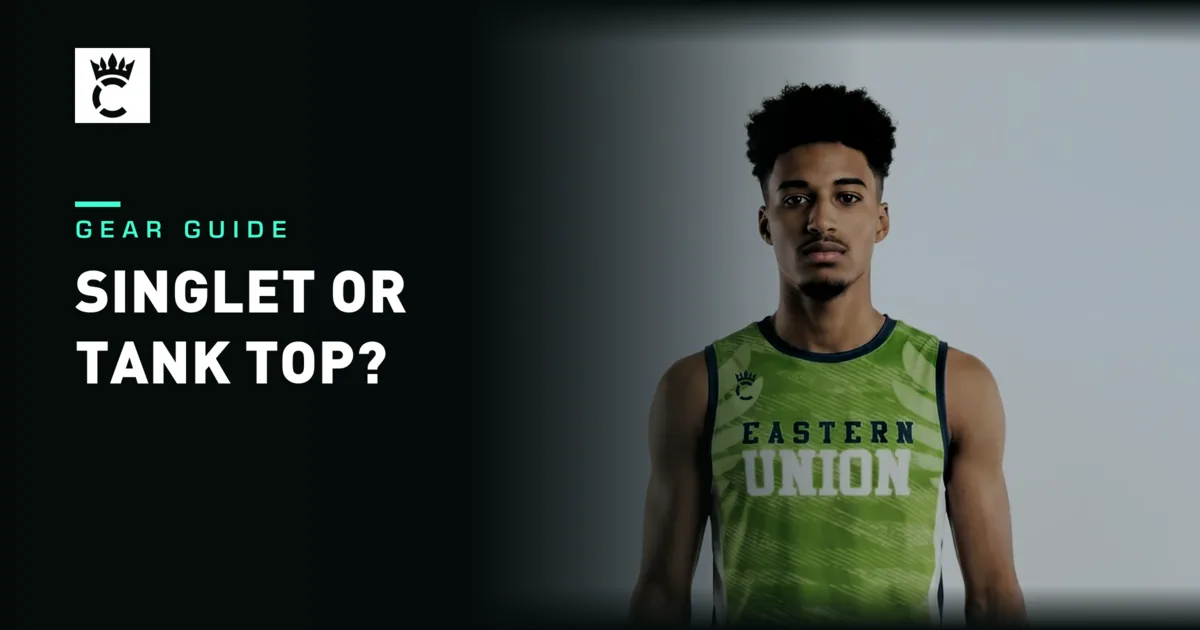
Quick answer: for racing, most runners are better off in a fitted singlet: it is lighter, moves less, and leaves nothing to rub under the arms. A loose tank is the better pick for easy days, hot practices, and athletes who want room around the chest. Many teams order both in the same design and let each athlete choose. Whichever you pick, have everyone run in it before race day.
Every season some version of the same question shows up in running forums: why do fast runners wear a singlet, and is a regular tank top really any different? Runners in those threads keep naming the same few reasons: less weight, less chafing under the arms, and better airflow than a normal T-shirt. If you are the coach picking a team uniform, that is a good starting point, but it is not the whole answer.
Here is how fitted singlets and loose tanks actually differ, who each one suits, and how to outfit a team without a fight in the locker room.
Singlet vs tank top: what is the real difference?
People use the two words loosely. In team uniform terms, the difference is the cut:
- Fitted singlet. A streamlined racing cut with a racerback. It sits close to the body so there is no fabric to flap, catch wind or ride up. Our Men’s Track Singlet is built this way: an athletic racerback cut in lightweight 100% polyester with flat seams.
- Loose-fit tank. A relaxed cut that hangs away from the chest and sides so air moves through on every stride. Our Men’s Loose-Fit Track & XC Tank is cut for exactly that, also with flat stitching.
Both are polyester, both take full sublimation, and both are made for track meets and cross country. The decision is fit and feel, not quality.
Why racers lean toward the fitted singlet
Runners who race a lot tend to give the same reasons, and they hold up:
- Less to carry. A fitted cut uses less fabric, and less fabric means less to soak with sweat or rain. In a mile it hardly matters. In a 5K or 10K, runners notice.
- Less chafing. Chafing usually starts where moving skin meets moving fabric: under the arms, across the nipples, along the straps. A snug, flat-seamed top stays put against the skin instead of sliding across it.
- Nothing flaps. Loose fabric can catch wind, billow on a downhill and bounce on a sprint. A fitted top stays still.
- Freedom through the shoulders. The racerback keeps the straps out of the way of the arm swing.
- Looks like a team. Sprinters and distance runners lined up in matching fitted singlets look sharp on the starting line. Numbers and logos stay readable because the fabric is not wrinkling around them.
There is a flip side. A fitted cut shows everything and asks the athlete to be comfortable in a close-fitting top. That is a real barrier for some kids, especially younger athletes and anyone self-conscious about their body.
When a loose tank is the smarter buy
Do not write off the looser cut. It earns its spot in the following situations:
- Practice and warm-ups. Easy miles in July heat are about airflow, and a loose tank moves air across the torso.
- Athletes who want more room. If a kid is uncomfortable in a close fit, they will either not wear it or race with their mind on it. A comfortable athlete in a loose tank beats a self-conscious one in a singlet.
- Throwers and jumpers. Field athletes often care more about shoulder freedom and a relaxed feel than shaving grams.
- Cross country teams with big age ranges. From a sixth grader to a senior is a wide range of builds, and a loose cut forgives more.
Fitted singlet vs loose tank at a glance
| Fitted singlet | Loose-fit tank | |
|---|---|---|
| Cut | Racerback, streamlined racing silhouette | Relaxed through chest and sides |
| Best for | Race day, sprints, distance racing | Practice, hot days, comfort-first athletes |
| Airflow | Light fabric, close to the body | Hangs away from the body so air moves through |
| Fabric | 100% performance polyester | Soft polyester, moisture-wicking |
| Seams | Flat stitching | Flat stitching |
| Men’s size range | S to 4XL | S to XXL |
Those specs come straight from the product pages; check the men’s track & XC size guide or the women’s guide before you order, because a fitted top only works if it actually fits.
The team answer: offer both in one design
Most coaches do not need to pick one. Because both styles are sublimated, you can put the same design, colors, logos, names and numbers on each cut. Athletes choose what they are comfortable in, and on the line the team still reads as a team.
A simple way to run it:
- Pick one design and one color set for the whole program.
- Offer the fitted singlet for racing and the loose tank as an option for athletes who want it.
- Collect sizes at a practice where kids can try on a sample. Do not guess from a T-shirt size.
- Order shorts to match. Our men’s training shorts and the women’s version come in the same sublimated colors.
If you want a starting point, the Track & XC bundle is built around a matching top and bottom, and you can ask for free design mockups to see your colors on both cuts before you commit.
What to check before race day
- Test run. Never race in something brand new. Have athletes run in the top at least once, ideally a long practice, to find the rub points.
- Underlayer. What athletes wear underneath matters. If you are also deciding on shorts, read our guide on compression shorts for running.
- Meet rules. Uniform requirements for your league or state association vary, so check your governing body’s current rules (for high school, that starts with the NFHS track and field rulebook and your state association) before you finalize a design.
- Women’s and girls’ cuts. We make fitted and loose options for women, girls and youth too: see the Women’s Track Singlet and the Girls’ Loose Fit Tank.
Bottom line
If your athletes race, the fitted singlet earns its reputation. If comfort and airflow in practice matter more, or kids are shy about a close fit, the loose tank is the better answer. Giving the team both, in one design, takes the argument off the table.
Ready to see it on your colors? Request a custom quote and we will send free design mockups.
Frequently asked questions
What is the difference between a running singlet and a tank top?
The difference is the cut. A fitted singlet has a streamlined racerback cut that sits close to the body. A loose-fit tank hangs away from the chest and sides for more airflow and room. Both can be made from lightweight polyester and sublimated in team colors.
Why do runners wear singlets to race?
Runners commonly cite less weight, less chafing under the arms and better airflow than a regular T-shirt. A fitted racerback also keeps fabric from flapping and keeps the straps out of the arm swing.
Can a team order both fitted singlets and loose tanks?
Yes. Both cuts can carry the same sublimated design, colors, names and numbers, so athletes choose the fit they are comfortable in and the team still looks matched.
How should athletes test a new track uniform?
Have them run in it at least once before race day, ideally a longer practice, to find any rubbing at the arms, straps or seams. Never debut brand-new gear in a race.
Are there uniform rules for track and cross country?
Requirements vary by governing body and state association. For high school, start with the current NFHS track and field rulebook and your state association, and check them before finalizing a design.