
guide
How Should a Wrestling Singlet Fit? A Sizing Guide for Coaches and Parents
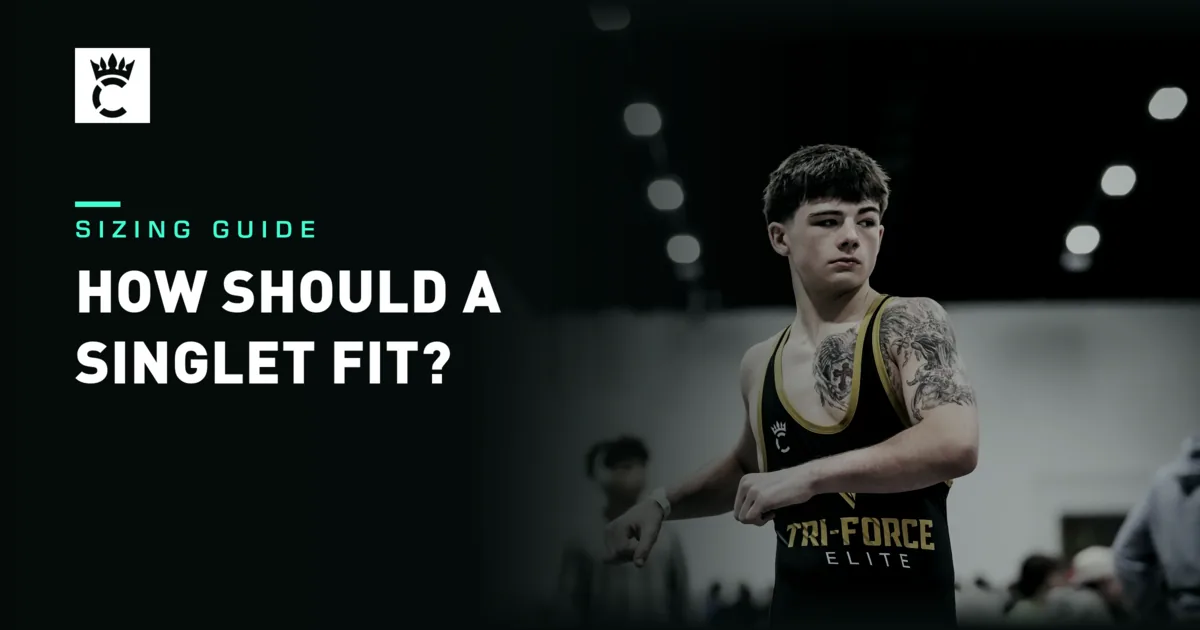
Quick answer: a wrestling singlet should fit like a second skin: snug through the chest, waist and hips with no loose fabric to grab, straps that sit flat on the shoulders without digging in, and legs that stay put on the thigh when the wrestler drops into a stance. If you can pinch more than a little fabric at the waist, it's too big. If the straps cut in or the legs ride up when he squats, it's too small.
Every preseason, the same question shows up in team group chats and on wrestling forums: what size singlet should I order? Parents of first-year wrestlers have never bought one. Coaches ordering for a whole roster have to size 30 or 40 kids at once, often before half of them have stepped on a scale. And because a singlet is meant to be tight, the usual "when in doubt, size up" instinct from t-shirts gets it wrong.
This guide walks through what a proper fit looks like, how to measure, how to read a singlet size chart, and how to size a team without a pile of exchanges in December. The numbers below come straight from the Compound men's and boys' wrestling size chart for our Pro Series Singlet.
What a good singlet fit looks like
A singlet does three jobs: it lets the wrestler move through every position, it gives an opponent nothing loose to grab, and it lets the referee see the action clearly. Fit is what makes all three work.
- Chest and torso: flat against the body, no wrinkles or gaps. The fabric should stretch evenly; you shouldn't see it pulling tight in one spot and baggy in another.
- Straps and armholes: straps lie flat on top of the shoulders. The armholes shouldn't gap open when the arms are down, and they shouldn't saw into the armpit when the arms go up.
- Waist: close to the body. A little ease is fine, but a fold of fabric at the belly is a handle for the other guy.
- Legs: the leg openings should grip the thigh and stay where they are when the wrestler sprawls, shoots or sits in a stance. Legs that creep up are a sign of a singlet that's too short in the torso.
- Length: when the wrestler squats, there should be no hard downward pull on the shoulders. That pull means the torso is too short, even if the chest measures right.
A quick fit test you can do in the room: have the wrestler drop into a stance, sprawl, and reach both arms overhead. If the singlet stays put and nothing pinches, it fits.
How to measure a wrestler
You need a soft tape measure and two minutes. Measure over a compression shirt or bare skin, not over a hoodie.
- Chest: around the fullest part of the chest, under the arms, tape level.
- Waist: around the natural waist, just above the belly button.
- Hips: around the widest part of the hips and seat.
- Weight: a current weight, not last season's. Weight is the fastest way to land in the right size, and it's how most coaches size a roster.
One thing that trips people up: most singlet charts, including ours, list half measurements (the flat width of the garment across the chest, waist and hips), because that's how the garment is spec'd. The fastest way to use the chart is by weight, then sanity-check with chest and hips.
Pro Series Singlet size chart (men's and boys')
Weights are approximate and come from our published size chart. The 1/2 measurements are the garment laid flat, in inches.
| Size | Weight (lbs) | 1/2 chest | 1/2 waist | 1/2 hips | Inseam |
|---|---|---|---|---|---|
| Youth XXS | 35-40 | 10 | 9 | 10 | 4 |
| Youth XS | 40-45 | 10 | 9 | 11 | 4 |
| Youth S | 45-55 | 11 | 10 | 12 | 4 |
| Youth M | 55-65 | 12 | 11 | 13 | 5 |
| Youth L | 65-80 | 12 | 11 | 13 | 6 |
| Youth XL | 80-95 | 13 | 12 | 15 | 8 |
| Adult XS | 95-110 | 13 | 12 | 15 | 8 |
| Adult S | 110-135 | 14 | 13 | 17 | 9 |
| Adult M | 135-165 | 15 | 14 | 18 | 9 |
| Adult L | 165-190 | 16 | 15 | 19 | 9 |
| Adult XL | 190-220 | 17 | 16 | 20 | 9 |
| Adult 2XL | 220-265 | 18 | 17 | 21 | 10 |
| Adult 3XL | 265-310 | 19 | 18 | 22 | 10 |
The fabric is an 86% polyester and 14% spandex blend, which is what gives a singlet its stretch and recovery. Women's and girls' singlets are graded on their own blocks, not on a resized men's pattern, so use the women's wrestling size chart for the Women's Pro Series Singlet.
Between sizes? How to decide
A wrestler who sits right on the line between two sizes is the most common sizing headache. A few rules of thumb:
- Cutting weight: if he'll be wrestling below his current weight by the time the season is in full swing, take the smaller size.
- Still growing: a middle schooler or a freshman who's growing fast can take the larger size if he sits near the top of a range, but don't go more than one size up. A singlet that's too big looks sloppy and gives the other kid something to hold.
- Tall for his weight: long-torso wrestlers often feel the pull on the shoulders first. If the chest fits and the straps dig, go up a size.
- Built through the hips and thighs: check the 1/2 hips number. Heavier lower-body builds can need the next size even at the right weight.
When you're unsure, look at last season's singlet. If it fit well, measure it flat across the chest and hips and match it to the chart.
Sizing a whole roster without the headaches
Coaches ordering for a full team usually have the hardest job, because they're sizing kids at the start of the season, before the lineup settles. What works:
- Collect current weights first. Weigh everyone in the first week of practice and size from that, not from what the kid says he weighs.
- Use a sizing sheet. Put every wrestler's name, weight and chart size in one place before you order. Our personalization form builds that roster sheet for you, with names, numbers and sizes, and exports it to a spreadsheet.
- Order a couple of spares in the middle sizes. Medium and large cover the most wrestlers, and having one or two extra saves a scramble when a new kid joins or someone moves weight.
- Give yourself time. Custom singlets are made to order, so lock sizes early in the preseason rather than the week before your first dual.
If you're outfitting more than singlets, our wrestling team bundles pair the singlet with fight shorts, compression and warm-ups so the whole roster is sized and ordered in one go.
Youth singlet sizing
Youth sizes run from XXS (about 35-40 lbs) through youth XL (about 80-95 lbs), with adult XS picking up from there. Youth wrestlers change size faster than anyone, so size by current weight and expect to re-order next season. For clubs, it often makes sense to stock a small run of each youth size so new kids can be fitted on the spot. See the Youth Pro Series Singlet for youth-specific details.
Singlet fit and the rules
Your state association and governing body (NFHS for most high schools, NCAA for college, USA Wrestling and UWW for club and international events) set the rules on what a legal uniform looks like, so check the current rulebook for your level, especially for things like design, logo size and approved alternatives. Fit itself is simple: a singlet that sits close to the body and stays in place is what officials and opponents expect to see. If you're new to the sport and want the basics first, start with our guide on what a wrestling singlet is.
Ready to size your team?
Every Compound singlet is custom made for your program, in your colors, with a free design mockup before anything is produced. Send us your roster and your rep will help you land the sizes. Get a free custom quote or browse every singlet and add your quantities in our Quick Quote catalog.
Frequently asked questions
Should a wrestling singlet be tight?
Yes. A singlet should fit snugly through the chest, waist and hips with no loose fabric, so an opponent has nothing to grab and the wrestler can move freely. It should not pinch at the straps or ride up at the legs.
Should I size up for a wrestling singlet?
Usually no. Size by current weight using the size chart. Only go up one size for a fast-growing youth wrestler near the top of a range, or a long-torso wrestler whose straps dig in.
What size singlet does a 120 lb wrestler wear?
On the Compound Pro Series chart, 110-135 lbs is an adult small. Check the half-chest and half-hip measurements if the wrestler is built heavier through the hips or is tall for his weight.
What size singlet for a 10 year old?
Size by weight, not age. A 55-65 lb wrestler is a youth medium and a 65-80 lb wrestler is a youth large on our chart. Kids the same age can be two or three sizes apart.
Are women's singlets sized differently?
Yes. Women's and girls' singlets are graded on their own patterns, not resized men's singlets, so use the women's wrestling size chart.