
guide
Custom Track Singlets: What Makes One Light and Comfortable
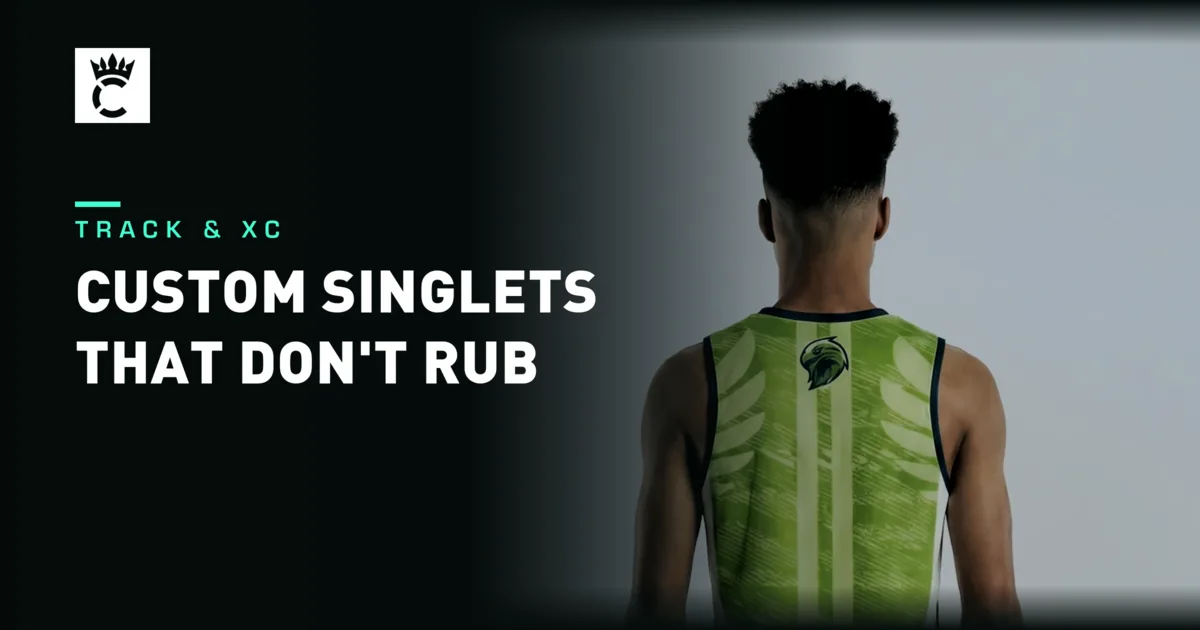
Quick answer: a good custom track singlet is light because of the fabric and the cut, and comfortable because of where the seams sit and how they are finished. Look for a thin 100% polyester performance knit, sublimated (dyed in) rather than printed on top, flat stitched seams, an armhole cut clear of the arm swing, and a size chart with real measurements. Before a full team order, put one sample on your hardest-to-fit runner and send them on a long run.
Search for custom running singlets and you will find the same complaint over and over. A runner on r/trackandfield put it plainly: they wanted reliable custom singlets that are light, and it is hard to tell from search results which sellers are real and which are just ads. Other runners describe seams that failed on the first run and armhole rub that looked like a rope burn.
None of that is bad luck. A singlet is a simple garment, which means the few things that go into it matter a lot. Here is what to look at, in the order it usually goes wrong.
Fabric: what actually makes a singlet light
Weight comes almost entirely from the fabric. A race singlet should be a thin, open performance knit, not the heavier polyester used for practice tees and warm-ups. Three things to check:
- Fiber. 100% polyester is the standard for race tops. It wicks, dries fast and holds sublimation ink. Cotton blends hold sweat and get heavy by the second mile.
- Thickness and hand. Hold it up to a light. A race singlet should feel close to weightless and drape, not stand up on its own. If it feels like a gym shirt, it will race like one.
- How it dries. Wet a corner under the tap and wring it out. Good race fabric feels nearly dry within minutes. Heavy fabric stays clammy.
Our Men’s Track Singlet and Women’s Track Singlet are cut from lightweight 100% performance polyester for exactly this reason. Premium name-brand race singlets use similar thin knits; what you pay extra for there is usually the logo and the fabric story, with diminishing returns once the basics are right.
Decoration: why sublimation keeps a singlet light
How the design gets onto the fabric changes the weight and the feel more than most coaches expect.
| Sublimated | Screen print or heat-pressed vinyl | |
|---|---|---|
| Where the ink sits | Dyed into the fibers | A layer on top of the fabric |
| Added weight | None you can feel | Grows with every number, name and logo |
| Breathability | Fabric breathes the same everywhere | Large prints act like a patch that traps heat |
| Over a season | No cracking or peeling | Edges can lift and crack, and stiff prints can rub |
| Design freedom | Any colors, patterns and gradients | Each color adds cost and layers |
A big chest number in thick vinyl can be the heaviest, stiffest part of a cheap singlet, and the edge of that patch is a common rub spot. With sublimation the number, name and team design are part of the fabric, so a singlet with a full design weighs the same as a blank one. If you want the longer version, read sublimation vs screen printing.
Seams and armholes: where chafing starts
Most singlet chafing comes from two places: a raised seam where skin and fabric move against each other, and an armhole cut so it sits in the path of the arm swing.
Seams
- Flat stitching. Run a finger over the inside of the side seams and the armhole. A good seam is flat and soft. A thick ridge of overlocked thread is a rope burn waiting to happen at mile four.
- Bonded and glued seams. Some high-end singlets glue seams instead of stitching them. Done well they are smooth; done badly the tape peels, which is the “failed on the first run” story runners tell. Stitched flat seams are the reliable choice for a team that washes after every meet.
- Fewer panels. Every seam is a possible rub point. Sublimation lets a design run across the whole garment without extra color panels sewn in.
Armholes
The armhole is where a singlet is won or lost. Too low and loose, it gapes and the edge saws back and forth across the inner arm. Too high and tight, it digs into the armpit. A racerback cut moves the straps toward the spine so the shoulder blade and arm swing freely, which is why most race singlets, including ours, use one. When you test a sample, have the runner swing their arms hard for 30 seconds and ask where they feel the edge.
Even a good singlet will rub on some runners on long, hot or wet days. Anti-chafe balm under the arms and along the bra line is normal race-day kit, not a sign the singlet is bad.
Fit: fitted singlet or loose tank?
A singlet that is a size too big flaps, holds water and rubs more, not less. One that is too small rides up and digs in. Fit matters as much as fabric.
Most programs race in a fitted singlet and offer a loose tank in the same design for athletes who want more room. We compare the two cuts in detail in track singlet vs tank top. For sizing, measure athletes against the men’s track & XC size guide and the women’s track & XC size guide instead of guessing from T-shirt sizes. Women’s and girls’ singlets should be cut on women’s patterns, not men’s sizes shrunk down; the Girls’ Track & XC Fitted Singlet is shaped for youth female frames.
What to check before a team order
Forums are full of runners who ordered blind and regretted it. A coach ordering for 30 or 60 athletes can avoid that with a short checklist:
- Ask for the fabric spec in writing. Fiber content and how the design is applied. “Performance fabric” on its own tells you nothing.
- See a real size chart. Chest and length measurements in inches, by size, for men’s, women’s and youth cuts.
- Get a sample or a size run. Put it on a distance runner and a sprinter. Have them do a real session in it, then wash it once.
- Approve a mockup before production. Check spelling, numbers and how the logo sits on the racerback. Compound sends free design mockups so you can see the full kit before anything is made.
- Plan the whole kit together. Order shorts in the same design so colors match: our men’s training shorts and women’s 3-inch compression shorts are sublimated the same way. The track & XC bundles put singlet, shorts and warm-ups in one package.
- Know your rules. Uniform requirements for school meets come from the NFHS rulebook and your state association. Check the current rules with your athletic director before you lock colors and design.
- Order early. Custom work takes time. See how long custom team uniforms take and work back from your first meet.
Care: keep them light all season
A singlet stays light only if the fabric stays clean and open. Detergent build-up and fabric softener clog performance knits so they hold water and smell. Our fitted singlets are labeled machine wash cold, tumble dry low, no bleach. Skip fabric softener, wash inside out with like colors, and get them out of the bag the same day as the meet.
The short version
A light, comfortable custom singlet is thin 100% polyester, sublimated instead of layered with prints, finished with flat seams, cut with a racerback armhole and sized from a real chart. Test a sample on your runners before you commit the whole team. When you are ready, start a track & XC quick quote or send the details through the custom quote form, and we will come back with free design mockups for your full kit.
Frequently asked questions
What fabric is best for a track singlet?
A thin, open 100% polyester performance knit. It wicks sweat, dries fast and takes sublimation ink. Avoid cotton blends, which hold water and get heavy.
Why does my running singlet chafe under the arms?
Usually a raised seam or an armhole that sits in the path of the arm swing. Look for flat stitched seams and a racerback cut, make sure the singlet is not too big, and use anti-chafe balm on long or hot runs.
Do sublimated singlets weigh more with a full design?
No. Sublimation dyes the design into the fibers, so a singlet with numbers, names and a full team design weighs the same as a blank one. Screen prints and vinyl add a layer on top.
Should our team order a sample before a full order?
Yes. Have a distance runner and a sprinter train in a sample and wash it once. Check fit against the size guide before you collect team sizes.
Are custom singlets legal for high school meets?
School uniform requirements come from the NFHS track and field and cross country rules and your state association. Check the current rulebook with your athletic director before you finalize colors and design.