
guide
Youth Baseball Pants Sizing: Fixing Length and Waist
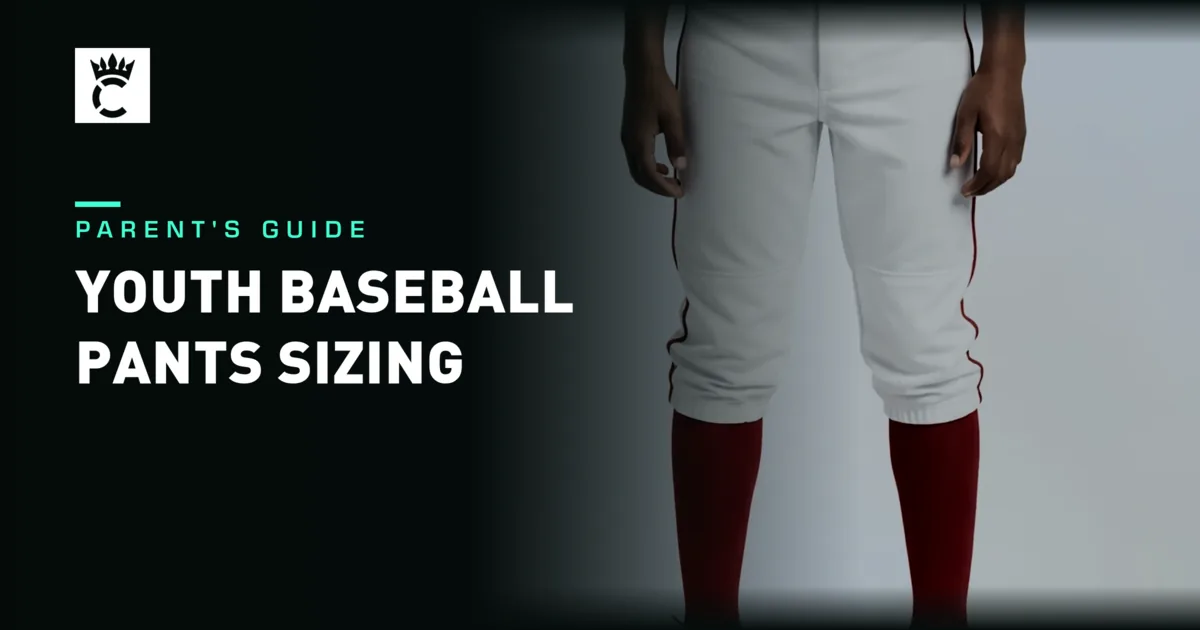
Quick answer: size youth baseball pants by the waist, then decide how much leg length you can live with. Lay a pair of pants that fits now flat, measure straight across the waistband and from the crotch seam to the hem, and compare those numbers to the baseball size chart. If the waist he needs comes with a leg that is far too long, which is the usual story for bigger and stockier kids, switch him to a high-cuff (knicker) pant. The cuff sits below the knee, so extra length doesn't matter and you can size purely for the waist.
Every spring the same post shows up on r/Homeplate. A parent writes that the pants that fit their son's waist are way too long in the leg, and the size that fits his legs won't button. Another parent says their younger, huskier son goes up a size and the legs run long. A third is hunting for husky-sized youth baseball pants and finding nothing labeled that way.
None of that means your kid is a weird size. It means baseball pants grow the waist and the leg together, and kids don't. Here's how to measure, how to read a chart, and what to do when the numbers don't line up.
Why youth baseball pants fit badly
A pant pattern steps the waist and the inseam up together. Go up one size and you get a little more waist and a little more leg. That works for a kid who grows evenly. It falls apart for three common builds:
- The stocky kid. Needs a bigger waist and seat but has an average or short leg. Every size that buttons is too long.
- The tall, thin kid. Needs a longer inseam but has a small waist. Every size that's long enough bunches at the belt.
- The kid between youth and adult. Has outgrown youth large in the waist, but adult sizes are cut for adult legs.
There is no such thing as a "husky" baseball pant in most team lines, ours included. So you solve it with measurement and with the cut of pant, not with a special label.
How to measure for baseball pants
You need a tape measure and a pair of athletic pants that fit him well right now. Our charts list flat garment measurements, so measure the pants, not the kid, and you'll be comparing like with like.
- Half waist. Lay the pants flat, waistband relaxed, not stretched. Measure straight across the top of the waistband from edge to edge. That's the half waist. Double it if you want the full waist.
- Inseam. Measure from the crotch seam down the inside of the leg to the hem.
- Write both numbers down, along with his current age and the size on the tag of the pants you measured. That tag is a useful sanity check against a new brand's chart.
If you have no good pair to measure, put a tape around his waist where his belt sits and halve it, and measure his inside leg from crotch to where you want the pant to end. That's less exact than measuring a pair of pants, but it gets you to the right row.
Our youth baseball pant sizes
These are the published numbers from our size charts, in inches, measured across the garment laid flat. All measurements are approximate.
| Size | Youth Slim Fit: half waist | Youth Slim Fit: inseam | Youth High-Cuff: half waist | Youth High-Cuff: inseam |
|---|---|---|---|---|
| Youth XS | 9 | 24 | 11 | 13 |
| Youth S | 10 | 25 | 12 | 14 |
| Youth M | 11 | 25 | 13 | 16 |
| Youth L | 12 | 27 | 14 | 16 |
Two things jump out. First, the high-cuff pant runs fuller in the waist at every size than the slim fit. Second, its inseam barely moves: youth medium and youth large share the same 16-inch inseam. That's the whole reason knickers fix the big-kid problem. The full charts, with diagrams, are on the baseball size guide.
When the waist fits but the length doesn't
This is the question in nearly every thread, so here are the honest options, best first.
1. Switch to a high-cuff pant
A high-cuff pant has a gathered elastic bottom that sits below the knee, and the lower leg shows off the team's socks or stirrups. Because the leg stops at the cuff, extra length simply gathers there instead of piling over the cleat. You size for the waist and you're done. Our Youth High-Cuff Baseball Pants also have a wide non-slip elastic waistband with belt loops, so the jersey stays tucked. One of the replies in the husky-pants thread recommends knickers for exactly this reason.
Knickers are normal at every level, from 8U to the big leagues. If your team already plays in full-length pants, ask the coach; plenty of teams let players choose, and many teams order both.
2. Hem the full-length pant
If the team wears full-length pants, buy the size that fits the waist and have the leg shortened. Any tailor or dry cleaner can do it. Fold the extra length under before cutting if you can, so you can let it back down next season as he grows. Don't buy two sizes up "to grow into"; the waist will be loose before the length is right.
3. Wear them a little long, on purpose
A slim-fit pant with a tapered leg sits cleanly over the cleat and handles a bit of extra length better than a wide leg. An inch or so of break at the shoe is fine. More than that is a tripping and sliding problem, so hem it.
Moving from youth to adult sizes
The jump from youth large to adult extra small is bigger in the leg than in the waist. On our slim fit, youth large is a 12-inch half waist with a 27-inch inseam, and adult XS is a 14-inch half waist with a 31-inch inseam. That's four more inches of leg for two more inches of half waist. A 12-year-old who has outgrown youth large in the waist usually hasn't grown four inches in the leg.
On the high-cuff pant the step is gentle: youth large is 14 and 16, adult XS is 15 and 16. So for a kid in the gap between youth and adult, the adult high-cuff pant is often the cleanest answer. Check the adult numbers on the size guide before you order.
For tall, thin kids the problem runs the other way. They need the leg of the next size up but not the waist. A slim fit in the longer size, with a belt and the waistband grippers doing their job, usually works better than a loose straight leg. Our Youth Slim Fit Baseball Pants have internal silicone grippers in the waistband for that reason.
Sizing pants for a whole team
If you're the coach or team parent placing the order, pants cause more exchanges than jerseys. A few habits prevent most of them:
- Collect two numbers, not one letter. Ask each family for the half waist and inseam of a pair that fits, plus the size they think they need. You can spot the mismatches before you order.
- Offer a choice of cut. If the team look allows it, let bigger kids go high-cuff while others wear full length in the same colors. Teams that build their look from the baseball bundles can mix pant styles without changing the jersey.
- Check the borderline kids. For any player between two sizes, have the family try on a teammate's pants in each size before you lock the order. Ten minutes at practice beats an exchange later.
- Order early. Custom team uniforms take time to make, so collect sizes well ahead of the first game. Our turnaround guide walks through the timeline.
If you're still pricing the season, our breakdown of what travel baseball uniforms cost covers pants alongside jerseys, socks and the rest.
The short version
Measure a pair that fits. Size for the waist. If the leg is too long, go high-cuff or hem it, and don't buy big to grow into. Coaches ordering for a roster can start a quick quote for baseball or send a full custom quote request, and we'll come back with free design mockups and help you sort out the size run.
Frequently asked questions
How do I know what size baseball pants my child needs?
Measure a pair of pants that fits him now: lay them flat and measure straight across the waistband (half waist) and from the crotch seam to the hem (inseam). Match the half waist to a size on the baseball size chart first, then check the inseam. If the leg is too long, consider a high-cuff pant or a hem.
Are there husky youth baseball pants?
Most team uniform lines, including ours, don't make a size labeled husky. The practical fix for a bigger kid is to size for the waist and choose a high-cuff (knicker) pant, so the extra length gathers at the cuff below the knee instead of dragging over the cleat.
Should I buy baseball pants a size up so he can grow into them?
Usually not. A size up adds waist and leg together, so the pants are loose at the belt and long at the shoe at the same time, which is a sliding and tripping problem. Buy the size that fits his waist now and hem the leg if needed, folding the extra under so it can be let down later.
What is the difference between youth high-cuff and slim fit baseball pants?
A high-cuff pant ends with a gathered elastic cuff below the knee and shows the socks; a slim fit is full length with a tapered leg that sits over the cleat. On our charts the youth high-cuff runs fuller in the waist at each size, and its inseam stays short, which makes it the easier fit for stockier kids.
When should a kid move from youth to adult baseball pants?
When youth large no longer fits his waist. Check the inseam before you switch: on our slim fit, adult XS is about four inches longer in the leg than youth large, while the high-cuff inseam stays the same. Compare both numbers on the size guide before ordering.