
guide
Wrestling Fundraiser Ideas That Work for High School Teams
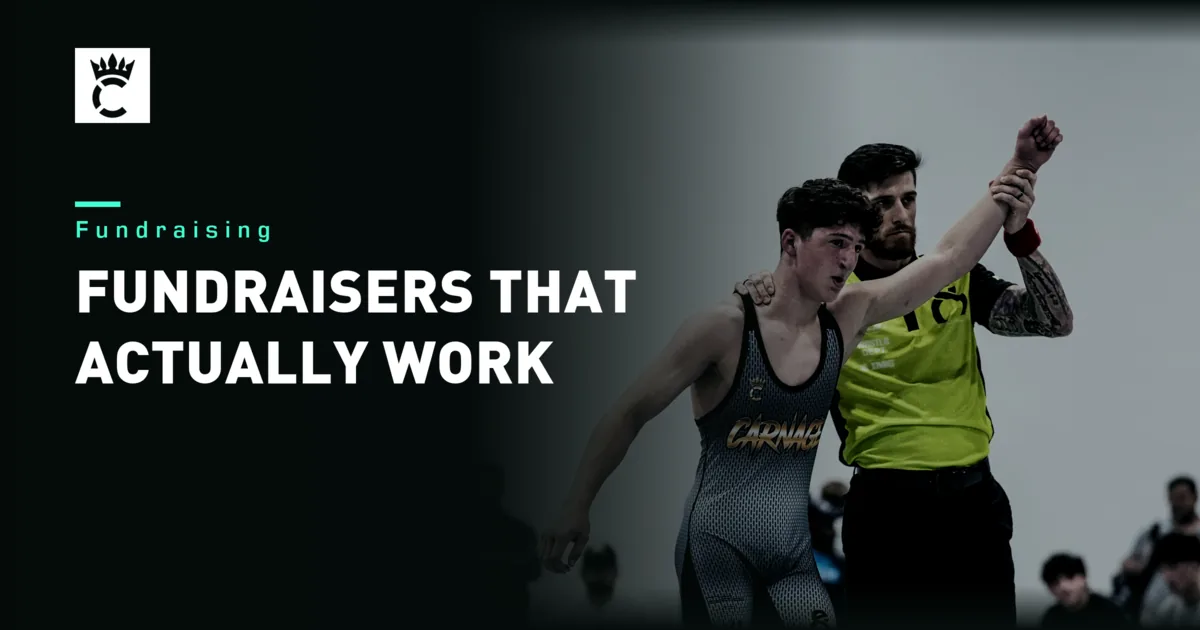
Quick answer: The wrestling fundraisers that raise real money are the ones built around wrestling: hosting a tournament, running a takedown-a-thon with pledges, a start-of-season letter to families and alumni, and a no-inventory spirit wear store. Add one or two sponsor deals and a summer camp, and most programs can cover singlets, warm-ups and travel without selling a single candy bar. Pick two or three, put them on a calendar, and tell people exactly what the money pays for.
Ask any high school wrestling coach where the money comes from and you'll hear the same answer: the boosters. A coach on r/wrestling put it plainly in a thread about why schools don't fund their own teams: the school covers the basics, and everything beyond that comes from the booster club. Another poster, a wrestler rather than a coach, started a thread asking how other teams fundraise because his program didn't get much support from the school.
The question that keeps coming back is the one asked in this r/wrestling thread: other than concessions, what works that is specific to wrestling? Here are the ideas coaches keep reporting, what each one takes to run, and how to build a season around them.
1. Host a tournament
When coaches compare notes, hosting is the fundraiser that comes up first. One commenter said their team raises about $10,000 a year from three things combined: a youth tournament, a start-of-season fundraiser and a golf outing. Your numbers will be different, but the tournament is usually the anchor.
Why it works: you already own the skills. Your staff knows how to run a mat, your parents know how to work a table, and wrestling families from other towns show up ready to spend a whole day in your gym. The money comes from several places at once:
- Entry fees for each wrestler.
- Gate for spectators.
- Concessions, which do far better over a ten-hour tournament than a two-hour dual.
- A vendor or spirit wear table, and sponsor signs around the gym.
A youth tournament is the easiest place to start. It fills a Saturday in the off weeks, it brings future wrestlers into your room, and young kids' families buy food all day. Before you book the gym, check the sanctioning and insurance requirements. Youth events typically run under USA Wrestling or your state youth association, and high school events fall under your state association. Each has its own rules for officials, weigh-ins and paperwork, so ask them first, not after the flyer is out.
2. Run a takedown-a-thon
A takedown-a-thon (some programs call it a wrestle-a-thon) is a pledge drive with a live event at the end. Each wrestler collects pledges from family, neighbors and local businesses, either a flat donation or an amount per takedown scored in a timed session. Then the team holds a short, fun practice in the gym and invites everyone to watch.
The Lakeville wrestling program in Minnesota publishes how they run theirs: each wrestler gets a pledge packet at practice in November with instructions and prize levels. That's the right shape. A few tips from programs that do it well:
- Push flat pledges. A per-takedown pledge from Grandma is fun until a heavyweight scores 40. Flat amounts are easier to collect and easier to budget.
- Use an online pledge page so out-of-town relatives can give without mailing a check.
- Give prize levels that wrestlers actually want, such as team gear, a hoodie or ProShield Headgear for the top fundraisers.
- Hold the event early, around the start of the season, when families are most engaged.
3. Send a start-of-season letter to families and alumni
In the r/wrestling threads, coaches mention family email and letter campaigns as some of their biggest single fundraisers. It's also the cheapest one to run. Each wrestler writes down ten or fifteen people who would want to support them: grandparents, aunts and uncles, family friends, a former coach. The program sends each person a short letter or email with a link to give.
Your alumni list is the second half of this. Former wrestlers remember the room, and many of them would give if anyone asked. Collect emails at every alumni dual and senior night, and send one note a year that tells them what's happening in the program.
What makes the letter work is being specific. "Support Central wrestling" raises less than "This pays for new singlets and the trip to the state duals." If you are raising for uniforms, our guide to what custom wrestling singlets cost for a team will help you set an honest goal.
4. Sell spirit wear without buying inventory
Clothing sales come up in almost every fundraising thread, and wrestling families buy gear. The old way, ordering a box of hoodies and selling them from a table, leaves the booster club with leftover sizes and money tied up in stock.
A pre-order store fixes that. You choose a short product list, set a margin on each item, open the store for one to three weeks, and share one link. Every buyer pays at checkout, and nothing is made until the store closes. Compound's online team and fan stores are free to set up, with no minimum order, and you choose whether to keep prices close to cost or add margin to raise money.
The pieces that sell to wrestling families are the ones people wear to a gym on a Saturday: the Momentum Hoodie in men's, women's and youth, the matching Momentum Jogger, and a tee for the grandparents. For the full playbook on margins, windows and reminders, read how to start a team store fundraiser.
Timing matters. Our Help Center says to allow 6 to 8 weeks from the store's close for orders to reach buyers, so a store meant for holiday gifts or the conference tournament has to open well before then.
5. Sell sponsorships to local businesses
Local businesses already sponsor youth teams, and wrestling has more to offer them than most sports: a gym full of families for every home dual and tournament. Package it simply:
- A banner in the gym for the season.
- A shout-out during home duals and in the program's social posts.
- A logo on the back of the team's warm-up shirt or spirit wear tee.
- An ad in the tournament program.
Keep sponsor logos off competition singlets. Uniform rules limit what can appear on the competition uniform, so check the current rulebook from your state association or NFHS before promising a business any spot on game-day gear. Warm-ups and practice gear are the safer place for a sponsor.
6. Add the off-season earners
A few more ideas coaches report in the threads, which fill the months between seasons:
- Summer camps and clinics. Run by your staff or a visiting college coach, these raise money and build your youth pipeline. One r/wrestling commenter listed summer camps right next to bottle drives as reliable earners.
- Golf outings. More work to set up, but they bring in alumni and business owners with bigger checks.
- Bottle and can drives. Low effort and steady where your state has a deposit program.
- Alumni dual or alumni night. Charge at the door, sell food, and collect those alumni emails.
How to pick the right mix
You don't need ten fundraisers. Most programs do better with two or three run well than with a different sale every month. Use this as a starting point:
| Fundraiser | Effort | Best time | Works best for |
|---|---|---|---|
| Host a tournament | High: gym, officials, volunteers | In season | Programs with a big parent group |
| Takedown-a-thon | Low to medium | Start of season | Every roster size |
| Family and alumni letter | Low | Start of season | Programs with active alumni |
| Spirit wear store | Low, no inventory | Preseason or holidays | Every program |
| Sponsorships | Medium: sales calls | Late summer | Towns with local businesses |
| Summer camp or clinic | Medium | Summer | Programs with a youth feeder |
A simple season plan looks like this: sponsor calls and a spirit wear store in late summer, a takedown-a-thon and family letter in November, a youth tournament in December or January, and a camp in the summer. Each one feeds the next, because the families you meet at the tournament become next year's donors and campers.
Spend it where wrestlers feel it
Booster money goes furthest when wrestlers can see it. Common targets are new singlets on a rotation, team warm-ups for the bus and the corner, tournament entry fees, and travel to a showcase dual. If uniforms are on the list, Compound's wrestling bundles group the pieces most teams order together, and you can get a quick quote for wrestling with free design mockups before the money is raised, so your fundraising goal is a real number. If who pays for what is still an open question in your program, read who pays for team uniforms.
Whatever you choose, close the loop. Post the team photo in the new gear and thank everyone who gave by name. That post is the opening line of next year's fundraiser.
Frequently asked questions
What is the best fundraiser for a high school wrestling team?
Hosting a tournament is usually the biggest single earner, because entry fees, gate, concessions and sponsor signs all come in on one day. Smaller programs often start with a takedown-a-thon and a start-of-season letter to families and alumni, which take far less work.
How does a takedown-a-thon work?
Each wrestler collects pledges from family, friends and local businesses, either a flat amount or an amount per takedown. The team then holds a short timed session in the gym. Flat pledges are easier to collect and budget than per-takedown pledges.
Can a wrestling team sell spirit wear without buying inventory?
Yes. Run a pre-order store: buyers pay at checkout during a one to three week window and nothing is made until the store closes. Compound's team and fan stores are free to set up with no minimum order, and orders arrive about 6 to 8 weeks after the store closes.
Can sponsor logos go on wrestling singlets?
Uniform rules limit what can appear on competition uniforms, so check the current rulebook from your state association or NFHS before promising a sponsor a spot. Warm-ups, practice gear and spirit wear are the safer places for sponsor logos.